


Acute Sports Injury First Steps That Help
- Robert Walters
- May 17
- 6 min read

You felt it right away - the pop, the twist, the sharp grab, the sudden loss of power. In that moment, acute sports injury first steps matter more than most athletes realize. The first hour after an injury can shape swelling, pain, confidence, and what your next few weeks look like.
A lot of active people make the same mistake. They either panic and shut down completely, or they try to push through and "test it" before the tissue has had any chance to settle. Neither approach helps. What works is a calm, structured response that protects the area, gives you useful information, and sets up the right rehab at the right time.
Acute sports injury first steps in the first few minutes
Start by stopping the activity. Not slowing down. Not limping through one more drill. Stop. If you keep loading an injured ankle, knee, shoulder, or hamstring in the heat of the moment, you can turn a manageable injury into a bigger one.
Next, take a quick snapshot of what happened. Was there contact or no contact? Did you hear or feel a pop? Did the joint buckle? Can you bear weight? Did swelling start immediately or build over the next hour? Those details matter because they help separate a minor strain from something that needs prompt medical evaluation.
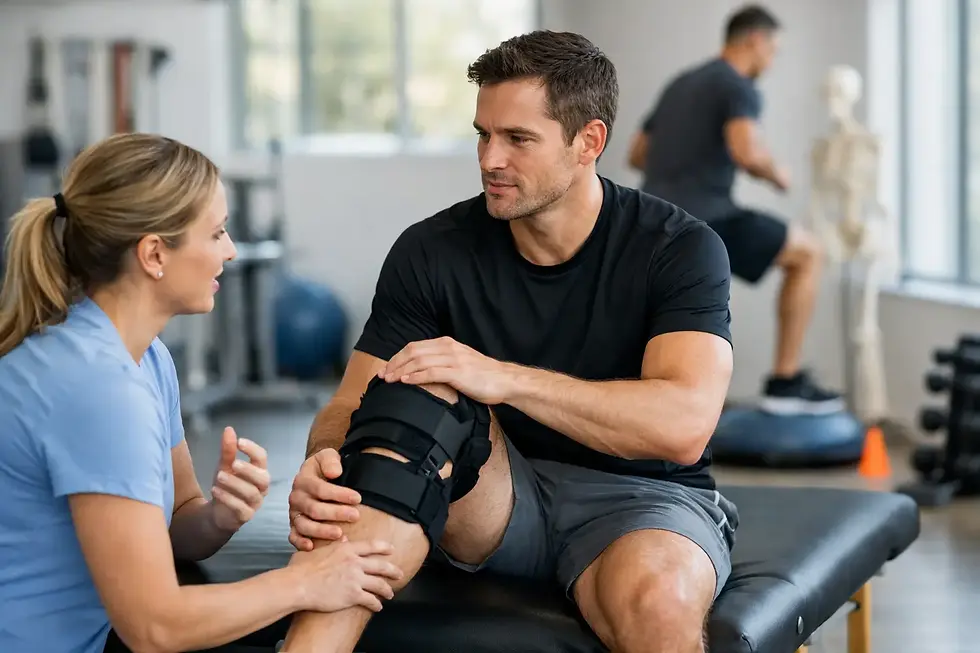
Then protect the area. That might mean getting off the field, using a brace or wrap if you have one, or avoiding movements that reproduce sharp pain. Protection is not the same as total fear-based immobilization. It simply means reducing unnecessary stress while the body gives you more information.
If pain is rising fast, swelling is obvious, or normal movement is suddenly limited, cooling the area can help with short-term symptom control. Ice is not magic, and it does not speed tissue healing on its own. But for the first day or two, it can make pain and swelling easier to manage if used in short intervals.
Compression can also help, especially for ankles, knees, and soft tissue injuries with visible swelling. A snug elastic wrap is useful. Too tight is not useful. If you feel numbness, tingling, or color changes below the wrap, loosen it.
Elevation is simple but often skipped. If you can get the injured area above heart level for periods of time, it may help limit swelling early on. This is most practical with lower-body injuries.
What not to do after an acute sports injury
The first bad decision is trying to prove it is "not that bad." Athletes do this all the time. They jog a few steps, squat on it, swing again, or try one more set because they do not want the session to be over. That immediate self-test is rarely useful if the movement is painful, unstable, or clearly altered.
The second bad decision is assuming complete rest for a week is the safest plan. It depends on the injury, but for many sports injuries, the recovery process goes better when you transition from protection to appropriate movement instead of staying inactive for too long. Early rehab is about timing. Too much too soon can irritate healing tissue. Too little for too long can lead to stiffness, weakness, and a slower return.
The third mistake is chasing random online advice. One video says stretch it, another says never stretch it, another says strengthen immediately. Without context, that advice can waste precious early days. The right move depends on the structure involved, the severity, and the current stage of healing.
How to tell if the injury needs urgent medical care
Some injuries should not wait. If you cannot bear weight for more than a few steps, if a joint looks deformed, if swelling is immediate and severe, or if you have numbness, weakness, locking, repeated giving way, or major loss of motion, get evaluated promptly.
Head injuries are their own category. If there is dizziness, confusion, headache, nausea, light sensitivity, memory issues, or any concern for concussion, stop all sport and get appropriate medical attention. The same goes for significant neck pain, shortness of breath, chest pain, or any injury that feels bigger than a standard sprain or strain.
This is where good judgment matters. Not every injury needs the ER, but some absolutely need more than home care. A stable mild ankle sprain is one thing. A knee that buckled with a pop and swelled quickly is another.
The first 24 to 72 hours: control the situation
Once the initial moment has passed, your job changes. Now you are trying to reduce unnecessary irritation and establish a plan. This is the phase where people get frustrated because they want certainty right away. You may not have a full diagnosis yet, but you can still make smart decisions.
Keep activity modified. That means avoiding the movements that increase pain, swelling, or instability. It does not always mean doing nothing. If your shoulder is injured, you may still be able to walk. If your ankle is injured, you may still be able to train upper body. Recovery goes better when you preserve what you can safely preserve.
Recheck the basics over the next day or two. Is swelling improving or getting worse? Is pain settling or escalating? Is range of motion opening up slightly, or is the joint becoming more guarded? These trends matter more than how it felt for five minutes after icing it.
Pain is useful feedback here, but it needs context. Mild discomfort during gentle movement is often acceptable. Sharp pain, increased limping, or a clear jump in swelling after activity usually means you are doing too much.
When movement should start
This is where acute sports injury first steps connect directly to better rehab outcomes. Early movement, when chosen well, can help maintain circulation, reduce stiffness, and keep the nervous system from overprotecting the area. But the keyword is chosen.
For example, a mild muscle strain may tolerate light pain-free range of motion fairly early. A sprained ankle may benefit from controlled mobility and gradual loading once severe pain settles. A suspected ligament injury with instability may need more protection before active rehab progresses. There is no single timeline that fits every injury.
The goal is not to rush. The goal is to start the correct level of rehab as soon as the tissue can handle it. That is a major difference. Fast recovery does not come from doing more. It comes from doing what matches the phase of healing.
A better question than “Should I rest it?”
Instead of asking whether to rest completely, ask this: what can this injury tolerate today without getting worse tomorrow?
That question is more useful because it leads to progression. Maybe today the answer is compression, protected walking, and gentle motion. Maybe in three days it becomes simple strength work. Maybe in a week it becomes controlled impact prep. Recovery is a series of right-sized steps, not one giant leap back to normal training.
This is especially important for driven athletes. If your mindset is all or nothing, injuries become harder to manage. Smart rehab lives in the middle ground. You protect enough to calm symptoms, then load enough to restore function.
Why the first plan matters so much
A lot of setbacks do not come from the original injury. They come from what happens after it. Too much rest. Too much confidence. Random exercises. No progression. Or waiting ten days for guidance while swelling, stiffness, and uncertainty pile up.
The best early plan does three things. It helps you understand what stage you are in, it shows you what to avoid, and it gives you a clear next action. That structure matters because an athlete who knows what to do is less likely to spiral into inactivity or overdo it trying to "stay tough."
For recovery-minded athletes, speed is not just about getting back faster. It is about reducing wasted time between injury and appropriate action. That gap is where people often lose momentum.
Acute sports injury first steps set up the comeback
The right response after an injury is not dramatic. It is disciplined. Stop the activity, protect the area, control swelling and pain, watch for red flags, and start phase-appropriate rehab as soon as it is safe. That is how you turn a chaotic moment into a recovery process.
If you are injured and do not want to lose days guessing, BounceBack can help you start with clear, personalized, phase-specific guidance right away. Download the BounceBack app on the App Store and take the next correct step today.


Comments